The biggest problem with metal roofs is almost never the metal itself. Steel and aluminum panels resist fire, wind, and age well when made and installed correctly. The real problems show up at the edges of the job: the fastening system used, how carefully the flashing was done at peaks and valleys, and whether the roof was designed for heavy snow and ice. Get those details wrong, and a material rated to outlast the house can leak or need repair years early.
Why are metal roofs not popular?
Metal roofing is still less common on homes than asphalt shingles, mainly because of upfront cost, installer availability, and myths that have not caught up with modern panels. Material and labor cost more than asphalt shingles, and not every crew has real experience with the flashing and seaming metal requires, which can turn a durable material into a leak-prone one. Many homeowners also still picture noisy pole barns, not the concealed-fastener systems used today. The material rewards a good installer, and punishes a bad one, more than shingles do.
Where metal roofs actually fail
Most metal roof problems trace back to two spots: the fasteners and the flashing, not the panels themselves.
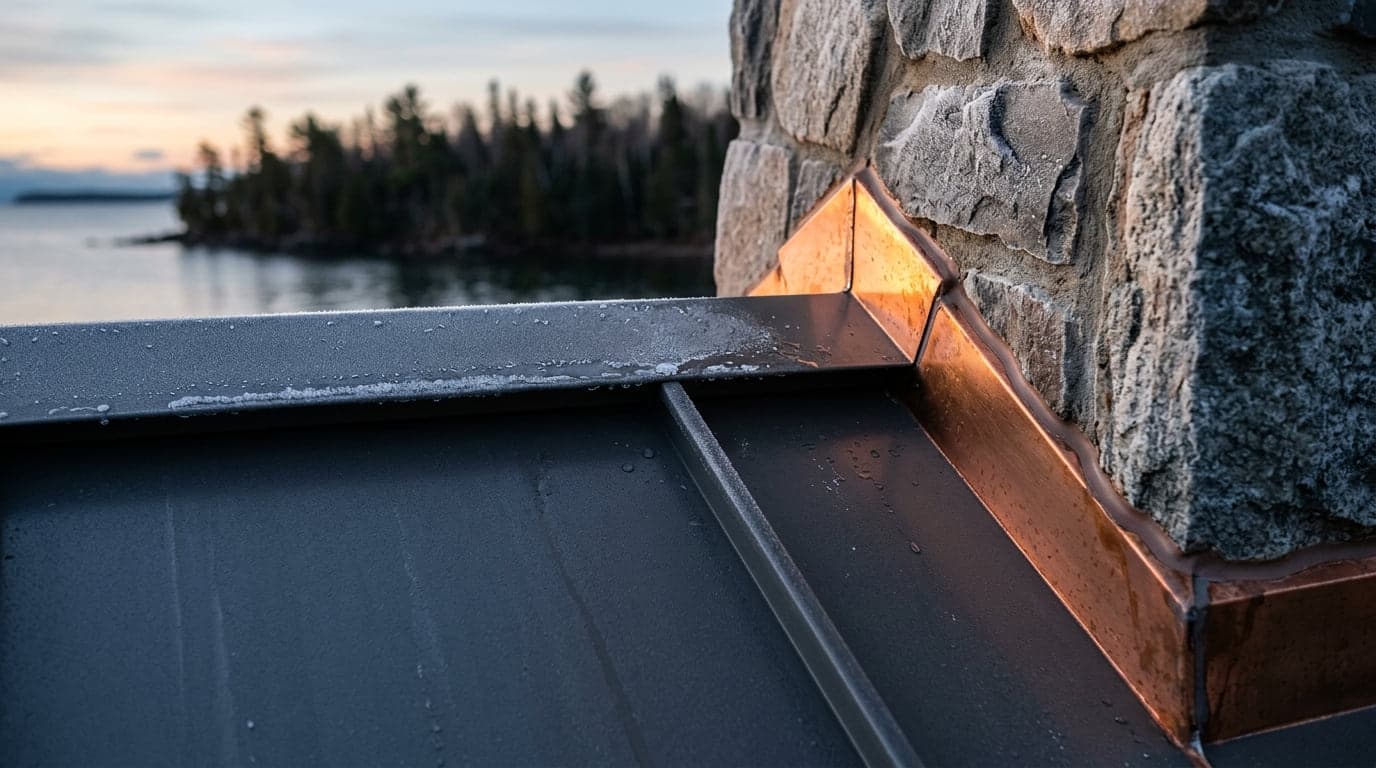
Flashing, the trim at peaks, valleys, chimneys, vents, and skylights, is the other common failure point, on any roofing material.
That is why the installer matters as much as the panel: careless flashing leaks on any panel, and a well maintained exposed-fastener roof can perform for decades.
What is different in Minnesota and Wisconsin winters
Cold climates add problems that milder states rarely deal with: ice dams, fast snow slides, and repeated freeze-thaw movement in the panels.
Attic insulation and ventilation are therefore as important as the roofing material for preventing dams.
Snow behaves differently on metal too: a smooth panel sheds snow in a fast slide instead of melting off gradually, which can drop a heavy slab on a walkway or car below low eaves, so snow country homes usually need a snow retention system. Temperature swings also make panels expand and contract, which can show as visible waviness (oil canning) on thinner panels: cosmetic, not structural. Hail is the other regional risk, and researchers at the Insurance Institute for Business and Home Safety have studied how metal roofing systems perform under hail impact.
How can I reduce noise from my metal roof?
More underlayment and more attic insulation are the real fixes, since the noise problem is overstated once a roof is installed the way houses are actually built.
The noisy-roof idea mostly comes from open barns, where thin panels sit over open framing with nothing to absorb sound. A house roof is different: solid decking, underlayment, and attic insulation sit between the panel and the living space and do most of the work of quieting rain noise, whether the surface is metal or shingles. Adding either layer helps more than switching panel types.
What is the average lifespan of a metal roof?
A well installed, concealed-fastener metal roof is commonly rated for 60 years of service life or more, matching how long the building itself is expected to last. Shorter-lived parts, especially exposed-fastener seals, may need attention well before that.
Long-term corrosion studies from the Metal Construction Association found that 55% aluminum-zinc alloy-coated steel standing seam panels, installed to specification, can perform for 60 years or longer. That figure describes the panel and coating, not the whole system: on exposed-fastener panels, the rubber seals age on their own timeline, separate from the metal underneath.
Is it cheaper to put a metal roof or shingles?
Asphalt shingles almost always cost less upfront than metal roofing, because of both material cost and the skilled labor metal flashing and seaming require. Metal typically needs replacing far less often, though.
Exact prices vary too much by panel type, roof complexity, and local labor to generalize with a number. What holds across the industry is the tradeoff: shingles cost less to install but have a shorter service life, while metal costs more upfront but, installed correctly, goes much longer between replacements. It is an upfront cost decision against a lifecycle cost decision, not a simple quality comparison.
Warning signs and when to call a professional
A few visible clues usually show up before a small problem becomes a real leak, and none of them require climbing onto the roof to check.
- Rust spots or streaking around screws, seams, or flashing
- Loose, backed-out, or missing screws on exposed-fastener panels
- Water stains, daylight, or musty smells in the attic near valleys or chimneys
- New dents clustered in one area after a hailstorm
- Ice buildup at the same spot on the eaves every winter
A yearly walk-around from the ground, plus a look in the attic after big storms, catches most of this early. Climbing on the roof, inspecting flashing closely, or tracking down a leak's source is work for a licensed roofing contractor. Working at height is not a homeowner task, and a wrong guess about a leak's source often costs more than the original problem.
The bottom line
The biggest problem with metal roofs is not the metal. It is whether the fastener system, the flashing at peaks and valleys, and the design for snow, ice, and hail were handled correctly. Many fears about metal roofing, especially noise, are overstated once it is installed the way houses are actually built. The real tradeoffs, higher upfront cost, the need for an experienced installer, and cold-climate detailing, are manageable with the right contractor.
People also ask
Why don't more people use metal roofs?
Cost and habit are the biggest reasons. Metal costs more upfront than asphalt shingles and requires an installer experienced with its flashing and seaming details, which not every roofing crew has. Lingering myths about noise and denting also discourage some homeowners, even though modern concealed-fastener panels perform well when installed correctly.
Does homeowners insurance go down with a metal roof?
Sometimes, but it depends on the insurer, the state, and the policy, not the roof material alone. Some insurers credit durable, impact-resistant roofing, but availability and amount vary. The Insurance Information Institute advises asking your agent directly rather than assuming a discount applies, and reading your own policy for specifics.
Does a metal roof devalue a house?
There is no solid evidence that it does. Independent data isolating metal roofing's effect on resale price is limited, but its durability is generally viewed as a selling point. Local factors, such as neighborhood fit, homeowners association rules, and installation quality, usually matter more than the material itself.
Sources
- New Study Verifies Steel Roofs Can Last As Long As The Buildings They Cover: Typically 60 Years Or More, Metal Construction Association
- 12 Ways to Lower Your Homeowners Insurance Costs, Insurance Information Institute
- Hail Impact Performance of Low-Slope Metal Roofing, Insurance Institute for Business and Home Safety (IBHS)