A metal roof for a 2,000 square foot home can cost very different amounts, because the 2,000 figure describes the floor inside, not the roof above it. The price follows the roof's surface area, its pitch, how many valleys, chimneys, and skylights break it up, and which kind of metal panel goes on. Start there, and the published cost figures start to make sense.
Why your home's square footage is the wrong starting number
Roofers price a roof by its surface area, measured along the slopes, not by the living space listed for the house. Two homes with 2,000 square feet inside can need very different amounts of roofing.
A one-story house spreads all 2,000 square feet under one roof, so the roof covers the whole footprint plus the overhangs. A two-story house of the same size may sit on a footprint of about 1,000 square feet, so it needs roughly half the roofing. Pitch adds more: a roof that rises 6 inches for every 12 inches it runs has about 12 percent more surface than the flat footprint it covers, and steeper roofs add more than that.
Roofers count in squares, and one square is 100 square feet of roof surface. That is the unit every honest metal roof quote should show you.
What national cost surveys show
The most widely cited public benchmark is the annual Cost vs. Value survey, which prices the same model projects in markets across the country. Its 2025 edition puts the national average job cost for a metal roof replacement at $51,865, against $31,871 for an asphalt shingle replacement, according to the Cost vs Value Report.
That figure is for a specific job, and the details matter. The survey's model is a full tear-off to bare wood sheathing, an ice-barrier membrane at the roof edges, synthetic underlayment, and 3,000 square feet of prefinished standing seam panels on a hip roof with two skylights, per its project description. Divided out, that works to roughly $17 per square foot of roof surface for that model, including removal and trim, per the national figures.
A 2,000 square foot home with less roof than the model, a simpler shape, or no skylights would usually land below that total. A steep, cut-up roof would land above it.
These are industry-general survey figures, not a quote. The real number for any house comes from measuring that roof, and no price is binding until it is written into a signed agreement.
What metal costs in Minnesota
Costs in the upper Midwest track close to the national average in that survey. The same 2025 report lists a metal roof replacement at $53,227 in Minneapolis and $50,520 across the West North Central region, per the Minneapolis report. Asphalt shingles came in at $31,900 in Minneapolis in the same data, from the Minneapolis report.
Cold climates add work that milder regions sometimes skip. The ice-barrier membrane at the eaves is standard practice here, and a smooth metal roof often needs a snow retention system so a slab of snow does not slide onto a walkway or car below. Both belong in the quote from the start rather than as surprises later.
Why sources disagree on how much more metal costs
Published comparisons range widely, because they compare different things. The Metal Roofing Alliance, a trade group for the metal roofing industry, tells homeowners to expect a metal roof to cost roughly two to three times what an asphalt shingle roof costs, in its FAQs. The Cost vs. Value model, which includes the same tear-off and prep work for both materials, comes out at about 1.6 times.
The gap mostly comes from what the comparison includes. Tear-off, disposal, underlayment, and trim cost about the same whichever material goes on, so including them narrows the ratio. Panel type widens it again: standing seam, with its concealed fasteners and custom-formed trim, sits at the top of the metal price range, while exposed-fastener panels cost less upfront but rely on screw seals that age, as covered in the biggest problem with metal roofs.
What moves the price up or down
Roof area sets the baseline, and a handful of details move the total from there:
- Pitch. Steeper roofs have more surface and need more safety equipment and time.
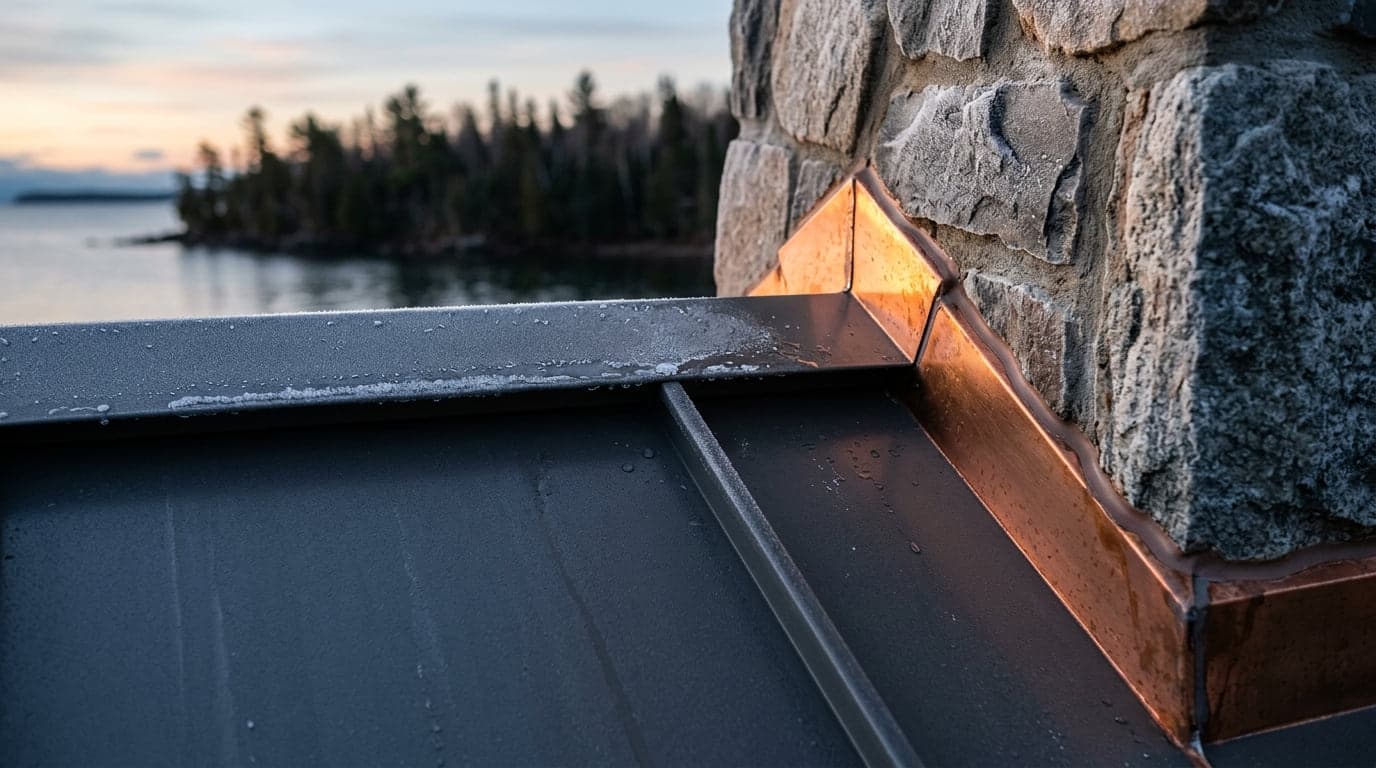
- Complexity. Every valley, dormer, chimney, and skylight needs custom flashing, which is where metal labor goes.
- Panel type and gauge. Concealed-fastener standing seam metal costs more than exposed-fastener panels; thicker metal costs more than thinner.
- Tear-off. Removing one or more old layers down to the deck adds labor and disposal, and it reveals any rotten sheathing that needs replacing.
- Snow and ice details. Ice-barrier membrane, snow guards, and heavier trim at the eaves.
- Access. Tight lots, steep grades, and lakeshore sites where materials are hard to stage.
How to compare metal against shingles fairly
Compare cost per year of service, not only the upfront price. The Metal Roofing Alliance says homeowners can generally count on a metal roof lasting 30 to 50 years or more, according to its FAQs, while the shingle label on a package is a warranty term, not a lifespan promise, as explained in whether a 30 year shingle really lasts 30 years.
Resale is a weaker argument. The 2025 survey found a metal roof replacement recovered about 50 percent of its cost in resale value nationally and about 45 percent in the West North Central region, per the national figures. Insurance savings are possible in some cases but depend on the insurer and the state, as covered in whether homeowners insurance goes down with a metal roof.
The bottom line
A metal roof on a 2,000 square foot home does not have one price, because the house size does not tell you the roof size. National survey data puts a full standing seam replacement well above asphalt shingles, close to the national figure in Minnesota, with most of the spread coming from roof area, pitch, complexity, and panel type. Get the number of squares measured first, and every quote after that becomes comparable.
People also ask
How many squares of roofing does a 2,000 square foot house need?
It depends on the footprint, the pitch, and the overhangs, not the living space. A two-story house of 2,000 square feet may need only about 12 to 15 squares, while a one-story house of the same size with a steep roof can need 25 or more. A square is 100 square feet of roof surface.
Why do estimates for metal roofing vary so much between sources?
They measure different things. Some quote a ratio against shingles, some quote a model house of a set size, and some quote material alone. The Cost vs. Value survey prices a full tear-off and a 3,000 square foot standing seam roof, which is a very different job from screwing panels over an old roof.
Does a metal roof pay for itself when you sell?
Usually not on its own. In the 2025 Cost vs. Value survey, a metal roof replacement recovered about half its cost in resale value nationally, and a little less in the West North Central region. The case for metal rests more on service life and fewer replacements than on resale.
Sources
- 2025 Cost vs Value Report, National Averages, Journal of Light Construction
- 2025 Cost vs Value Report, Minneapolis, Minnesota, Journal of Light Construction
- Roofing Replacement, Metal: project description, Journal of Light Construction
- FAQs, Metal Roofing Alliance