When an attic cannot breathe, the rest of the house pays for it: shingles age faster, ice dams show up, and energy bills keep creeping.
Balance Intake and Exhaust Vents
Fresh air should enter low through soffits and leave high through ridge or roof vents. When intake and exhaust are out of balance, air stalls and heat stays trapped under the roof deck.
Add Roof Vents Where Air Gets Stuck
Dormers, valleys, long spans, and complex roof geometry can create hot pockets. Targeted vent placement helps move that trapped air without overloading the roof with hardware.
Clear Blocked Air Paths Inside the Attic
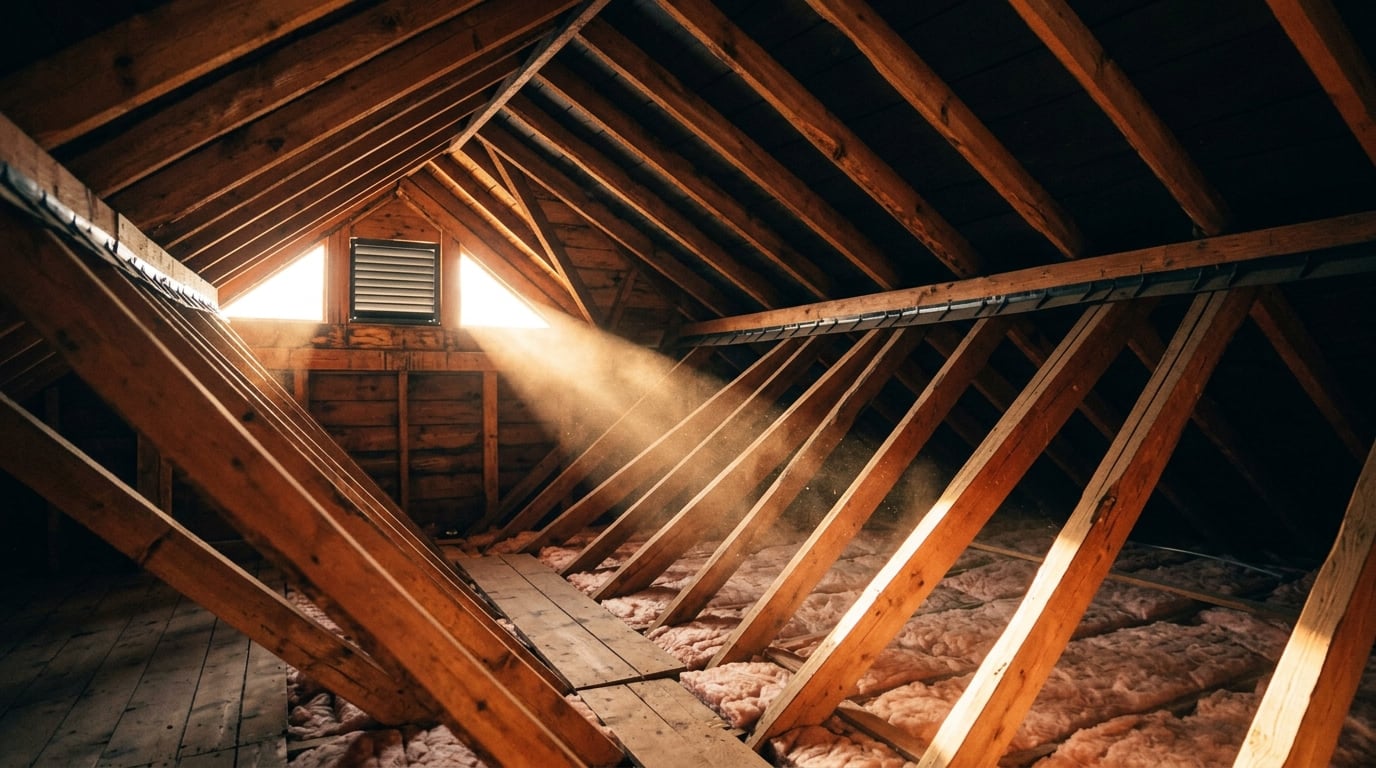
Insulation often gets pushed against the roof deck and blocks soffit airflow. Baffles create a protected air channel from the eaves into the attic space.
Decide If Mechanical Ventilation Makes Sense
Attic fans can help when natural airflow is limited by roof shape, shade, or low-slope construction. They need careful sizing so they pull from the attic, not conditioned rooms below.
Know How Much Ventilation Your Attic Needs
A common rule is one square foot of net free ventilation area for every 300 square feet of attic floor, split between intake and exhaust.